Ten Years In: How the Columbia Center for Community Health’s InTOuCH Program Became a National Model
A conversation with Dr. Janhavi Mallaiah, who has led Columbia's community health worker training program since its founding in 2016.
A community health worker once called Janhavi Mallaiah to share some news: Their A1C, a key marker in diabetes management, had dropped from 9.5 to 6. Months earlier, that community health worker, or CHW as they are sometimes called, had been in a Columbia Center for Community Health training program called Institute for Training, Outreach and Community Health (InTOuCH). They decided to apply what they learned to their own life first.
“That’s something a doctor cannot do,” said Mallaiah, who has directed the program since its inception. “That is something nutritionists cannot guide you to do.
“When I find that community health workers are able to bring about this change on their own just by being part of an eight-week training program, that’s just huge and very gratifying to me.”
That ripple effect, training someone to serve their community and watching that training change their own life, is the story of the Columbia Center for Community Health (CCCH), which also provides community members free-of-charge health insurance enrollment, health care screenings, and community research opportunities in the Jerome L. Greene building on the Manhattanville campus (Monday-Friday, 10 a.m.-12 p.m., 2 p.m.-4 p.m.).
“The mission of the InTOuCH program is really to serve as a bridge between the health care system and our communities by recruiting, training, and empowering lay people into become community health workers,” Center Co-Director Dr. Olajide Williams said at a recent event celebrating 10 years of the program. “The community health worker does more than translate knowledge; they also translate the fears, hopes, and possibilities that we too often fail to communicate as health care providers.”
Ten years and 21 cohorts later, 320+ community health workers have come through the InTOuCH program and gone on to work in hospitals, state government, research labs, and even their own churches. Some 100,000 New Yorkers have been touched by their outreach.
One Cohort Becomes a Movement
The CCCH, originally known as the Columbia Wellness Center, was created as part of Columbia’s West Harlem Community Benefits Agreement when the University constructed the Manhattanville campus. Williams, a longtime community-driven researcher at Columbia, was approached by the University to build something that could give back in terms of health resources and community outreach in a lasting way.
He brought on Mallaiah, then working on Williams’ Hip-Hop Public Health project, and Harmon Moats, who has deep roots in community organizing across Upper Manhattan.
“We spent hours brainstorming on what was the best way to move forward, and we decided on starting this community health worker training program,” Mallaiah said. “We just went from there.”
The first cohort in 2016 was 10 church leaders from Harlem. Williams’ existing relationships with local congregations (built through earlier studies and work in the community) shaped that choice, and the CDC’s stroke and cardiovascular curriculum was culturally adapted to fit the community they were training. Faculty were hand-picked from across Columbia to teach an eight-week course.
That first try worked so well that a second cohort followed almost immediately … and then a third. Today, InTOuCH has just wrapped its 21st cohort.
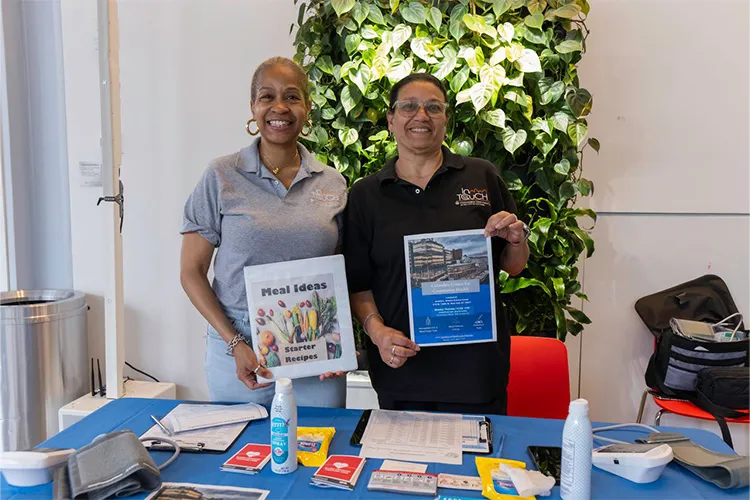
The program has also grown to include InTOuCH Program Coordinator Samantha Drummond and Nurse Educator Anne-Elie Etienne on the team. Drummond coordinates the program and community events, as well as continuing education opportunities for alumni. Etienne conducts health screenings, provides health education for community members who visit the center, and facilitates practical skills training and health counseling sessions from each InTOuCH cohort.
Strong Foundation for Community Health
What began as a single training track has since branched into a portfolio of specialized programs, each built on the same foundation. CHWs who complete InTOuCH’s core training can go on to receive additional, specialized instruction tied to specific NIH-funded research, including TRIUMPH, a depression study; CHURCH, a colorectal cancer screening trial; and NYC-SIGHT, a now-concluded vision study conducted with Columbia’s Edward S. Harkness Eye Institute.
In each case, InTOuCH graduates, hired as variable-hour officers, are trained to conduct screenings, provide motivational interviewing, and connect community members to referral services themselves, rather than having Columbia researchers do that outreach directly.
“The very concept of community health workers is that they're trusted members of communities that bridge the gap between community and the healthcare systems,” Mallaiah said.
The approach, she added, has become an important employment pathway for alumni: Some of the program's very first graduates from 2016 are still active with the center today.
“The reason why community health workers are so vital, the reason why InTOuCH is such an integral part of what we're doing here at Columbia University has everything to do with the fact that we live and work in the midst of two significantly medically underserved communities,” said CCCH Co-Director Dr. Robert Fullilove, who joined the center in 2022. “I believe that community health workers are a critical part of the work that we must do in communities that are medically underserved or that are confronting some sort of public health challenge.
“We have to have folk who are culturally able to bridge the communication gap that often exists when science tries to talk to the average person in the street.”
Alumni of the InTOuCH program have gone far: some to medical school and nursing school; one completed a PhD and now sits on an advisory board for another CHW training program. Several work at the New York State Department of Health, in some cases returning to InTOuCH as trainers themselves.
Over its first decade, the center estimates it has touched more than 100,000 lives through its health screening events, led by community health workers trained in the InTOuCH program.
“The CHW training here at Columbia University is second to none,” said Glenn McMillan, a community health worker who went through the program. “One of the things that impressed me about the training was the instructors who were very competent in their field. We actually received instructions from heads of departments at the medical school, and the training was very detailed.
“That has allowed me to show up with knowledge that I could convey to my community as a trusted member of the community and actually address the health concerns within my family as well as within my community. There are people in my family who have suffered from various health challenges where I have recommended a change in diet, a more anti-inflammatory diet. They've seen positive results. And as people see positive results, you become even more of a trusted resource in your family and in your community.”
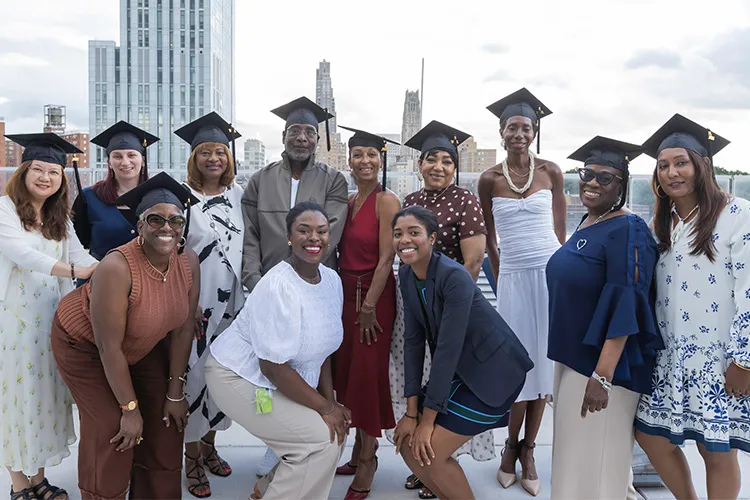
Staff from partner organizations, including shelters and food pantries, have completed the program and brought new skills, such as basic blood pressure checks, back to their roles. Others have become patient navigators in hospital systems, researchers at NYU, social workers, and in at least six or eight cases certified chaplains.
“It's just too many for me to even list,” Mallaiah said.
Over its first decade, the center estimates it has touched more than 100,000 lives through its 30 to 50 community screening events hosted by the InTOuCH Program’s community health workers each year.
A Model Shaped by Global Experience
Mallaiah's own path to Columbia informs much of how InTOuCH is built. Trained as a physician in India, she spent years practicing community medicine and training and monitoring community health workers there—part of a national system that deploys roughly two million CHWs through India's federal healthcare system.
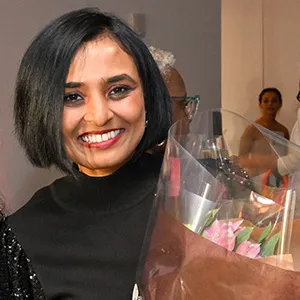
She came to the U.S. for further education and was recruited to Columbia for the Hip Hop Public Health project. A week before she started, Williams called with what she describes as “another proposition:” Would she help build a community health worker program from the ground up?
“I said, ‘Of course, it's what I love. It's what I did back in India,’” Mallaiah said.
What started as an addition to her existing role became a passion she's often described, only half-jokingly, as her own child.
By comparison to countries like India, Mallaiah said, community health work in the U.S. is still a young field. Even though the concept dates back centuries, it wasn't formally adopted in the U.S. until the ’70s, and there's still no national standard: no consistent curriculum, no shared competency test, and, in New York State, no accreditation requirement at all.
“It's very fragmented right now, but I have hoped that that will change,” Mallaiah said.
And change it will, pushed forward by Mallaiah’s work with the InTOuCH program and the new curriculum she’s building to expand the success of Columbia’s InTOuCH program nationwide.
The Roadmap for the Next Ten Years
Looking ahead, Mallaiah named four priorities for the program and the CCCH:
Digitizing the community health training program into an asynchronous format, using the same faculty who built the program, so InTOuCH can reach communities beyond New York City.
Publishing the standardized curriculum and model, so other institutions can replicate it.
Deepening the program's focus on social determinants of health, in partnership with Columbia's School of Social Work, as Medicaid increasingly funds community health worker roles connected to housing, food, and other social care networks.
Establishing a Columbia executive certification program for community health workers, which is something the team has discussed at length, though it hasn't yet moved from plan to reality.
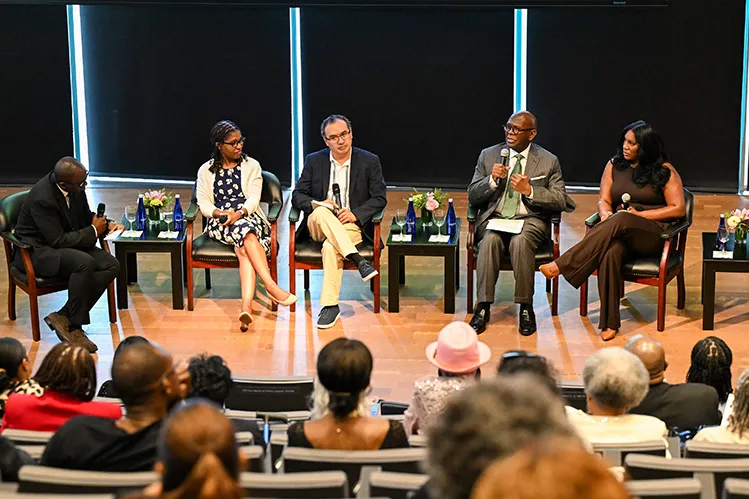
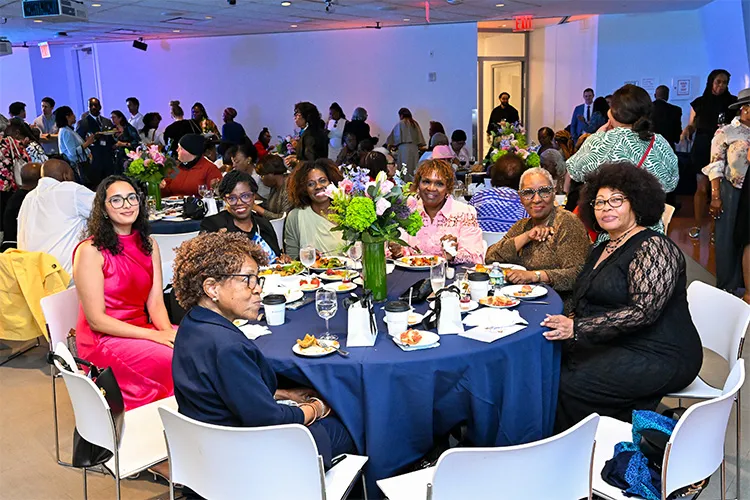
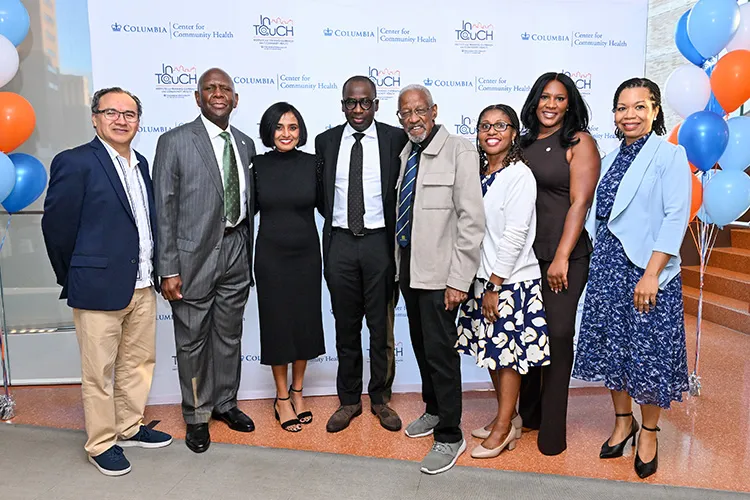
That momentum was on full display on May 28, 2026, when the center marked its 10th anniversary with a symposium and celebration co-hosted by the CUIMC Office of Development. Ninety-eight community health workers filled the room, alongside staff from the Columbia Community Health Center and the Vagelos College of Physicians and Surgeons Office of Development. Williams, Fullilove, and Mallaiah spoke, joined by Dr. Katrina Armstrong, director of the Vagelos Institute and the Harold and Margaret Hatch Professor in the Faculty of Medicine.
On a panel alongside Williams sat Debbian Fletcher-Blake of VIP Community Services, Jairo Guzman of the Mexican Coalition, Columbia community health worker James Johnson, and Dr. Kiiera Robinson of Waymark. It was a room that traced the program's reach from a single Harlem congregation ten years ago to partners across the city today.
“We always start somewhere,” Mallaiah said. “But something else may turn out of it.”
Ten years in, that's proven true time and again. One cohort, one partnership, one person at a time.