Uncovering Upper Manhattan’s Connections to the Revolutionary War With Bundles Scholar Gail Addiss
From Morris-Jumel Mansion to Dyckman Farmhouse Museum, Addiss shared historical sites to visit Uptown.
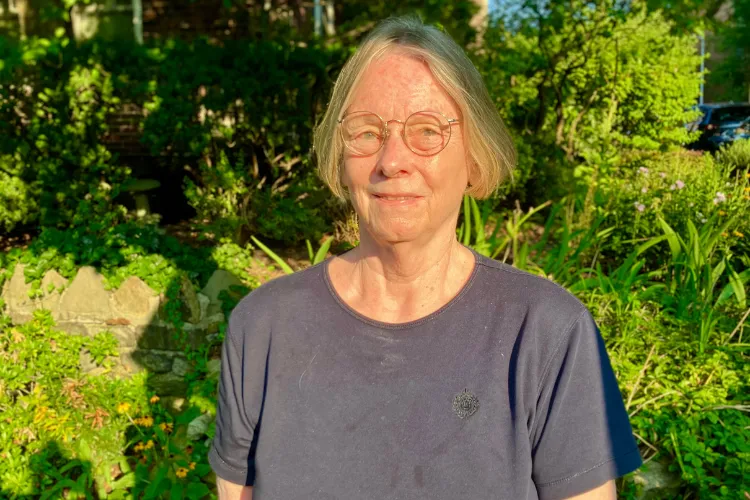
From Fraunces Tavern to Bowling Green, Lower Manhattan’s cobblestone streets are lined with Revolutionary War landmarks, but Northern Manhattan’s role in that definitive era of American history is often overlooked. Architect and A’Lelia Bundles Community Scholar Gail Addiss is on a mission to spread awareness about Uptown’s significance during the American Revolution.
“We’re at a really critical time,” she told Columbia Neighbors. “We’re a culturally diverse neighborhood, and we’ve all chosen to live here. We’re all Americans, and our area played an important part in our country’s founding. This origin story is part of our fundamental shared narrative, and I think it will help to unite us as a community, and hopefully as a country.”
Through her Bundles project, Addiss is organizing walking tours, communal exhibitions, and public forums to highlight Uptown parks and sites connected to the Revolution. Ahead of the United States’ 250th anniversary, she shared a few landmarks hiding in plain sight.
Uptown’s Waterfront Parks
Multiple locations.
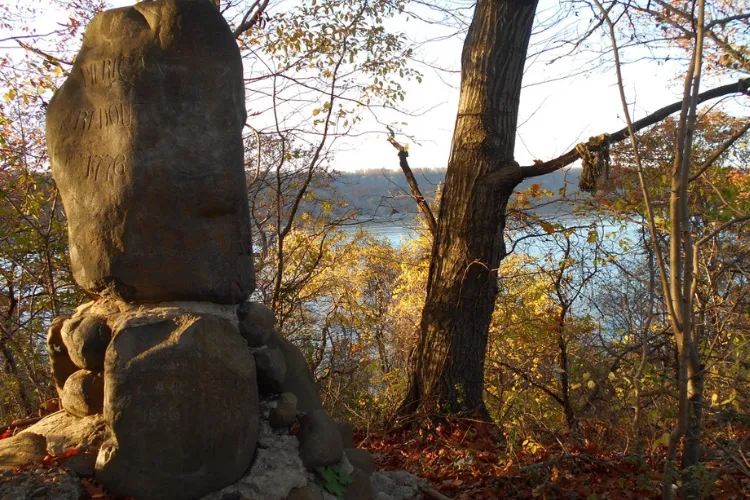
Addiss suggests starting with the green spaces of Upper Manhattan. The banks of the Hudson and Harlem rivers were the backdrops for pivotal Revolutionary War moments.
“Most of Northern Manhattan’s large parks along the high ground at water’s edge, including Fort George on the Harlem River (Laurel Hill), Fort Washington, Fort Tryon, and Fort Cockhill in Inwood Hill Park on the Hudson, were sites of fortifications, encampments, and battles during the Revolution,” she said.
In the late 19th century, Central Park Commissioner Andrew Haswell Green founded the American Scenic and Historic Preservation Society to preserve these sites, recognizing both their historical significance and scenic value as the city expanded northward, and providing parks for the growing population became a priority.
"Plaques within the parks note events and people who played important roles, like Margaret Corbin, the first woman to receive a military pension for fighting in the American Revolutionary War,” Addiss said. “It may seem incongruous to enjoy the natural beauty while knowing people fought and died on the land, but being aware of the history gives a richer value to the experience, remembering the places with a historic past.”
Battle of Harlem Heights Plaque
2990 Broadway
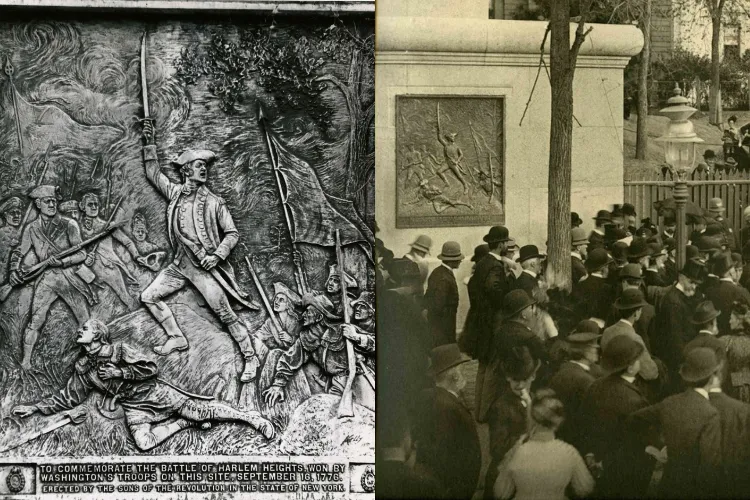
Riverside Drive is known for its lush greenery and Hudson River views, but the land was once the site of a small battle that shaped the Revolution’s trajectory. The Battle of Harlem Heights, fought Sept. 16, 1776, on a buckwheat field near what is now 120th St. and Broadway, was the Continental Army’s first victory under General George Washington’s leadership.
This victory was a critical morale boost after the loss at the Battle of Kips Bay the day before.
“The plaques and monuments are part of our city's history as they show people the significance of the land,” said Addiss. “Installed in 1897 at Columbia’s newly-built Morningside Heights campus on the battle’s site, this bas-relief sculpture by James Kelly depicted the heroes of the Battle of Harlem Heights.”
Bennett Park
West 183 Street between Fort Washington and Pinehurst Avenues
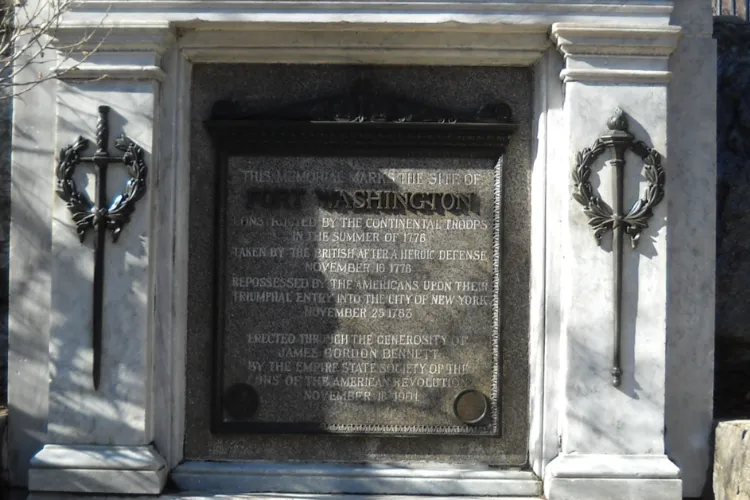
Atop the highest point of land in Manhattan, Bennett Park was once a central command post for General George Washington. Fort Washington, constructed in 1776, was the last Patriot stronghold as the war swiftly spread to other parts of Northern Manhattan. It was seized by British and Hessian (German auxiliary) forces in November of 1776. Following the war, remnants of the battle faded into oblivion.
“In the early 20th century, archeologists found remnants of the fort's walls,” said Addiss. “There is now a paved bluestone and granite outline of where the eastern section of Fort Washington was. A 1901 monument commemorating the Battle of Fort Washington is on one of the park's walls.”
Morris-Jumel Mansion
65 Jumel Terrace
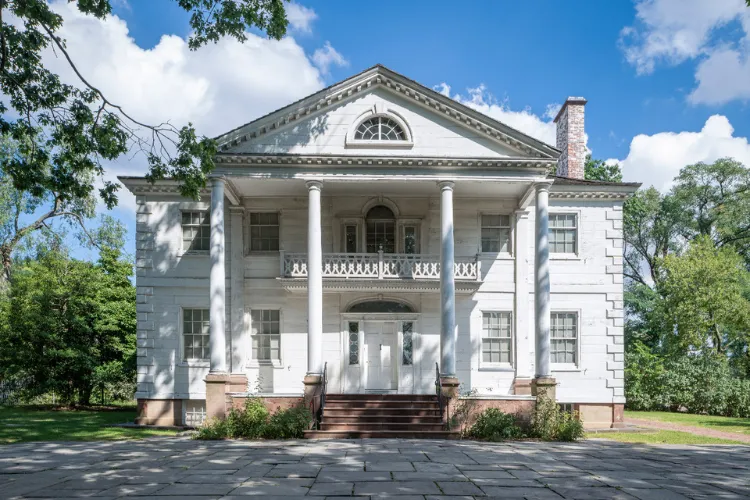
Built in 1765 on colonized land that was ancestral home to the Lenape people, the Morris-Jumel Mansion has lived many lives. The residence, dubbed Mount Morris, served as a summer home for British Colonel Roger Morris, his wife Mary Philipse Morris, and their children.
According to the Morris-Jumel Mansion museum, the home was built by those who were enslaved and labored beside free Black workers, indentured servants, and others who were hired. Ten years after it was built, Colonel Morris fled to London to escape the beginning of the American Revolution, and his family relocated to Yonkers. On September 15, 1776, after losing a battle in Brooklyn, General George Washington moved into the abandoned home with his officers and staff.
“It was the second-highest point in Manhattan,” said Addiss. “When you visit this space, it’s as if the songs featured in the musical Hamilton come to life. You can step into the Octagonal Room that Washington used as his office and imagine what 18th-century New York was like. It’s such a beautiful architectural gem.”
The mansion, Manhattan's oldest surviving residence, is today a museum and community-centered space for cultural and historical programming Uptown.
The Hessian Hut at Dyckman Farmhouse Museum
4881 Broadway
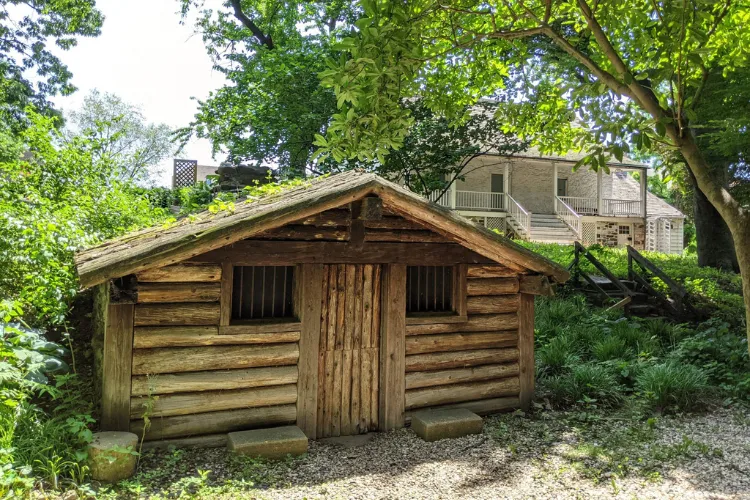
After a string of early losses, Washington and his soldiers were pushed out of Manhattan, leaving the British to construct huts for Hessian troops—hired soldiers from the German state of Hesse-Kassel—across Northern Manhattan. The reconstructed Hessian Hut at Dyckman Farmhouse Museum shows what living arrangements were like for soldiers during this era.
“During the British occupation, there was a Hessian soldier encampment of more than 60 huts on land owned by the Dyckman family, between present-day 201st and 204th streets along Prescott Ave.,” said Addiss. “Amateur archaeologists and historians, including Reginald Pelham Bolton, began conducting digs in 1914 and discovered the remains. The 1916 decision to reconstruct the hut adjacent to the larger Dyckman House was an important act of preservation. It preserves the living space of ordinary soldiers who were also on the other side.”