The Mass Transit Man— Thomas Abdallah
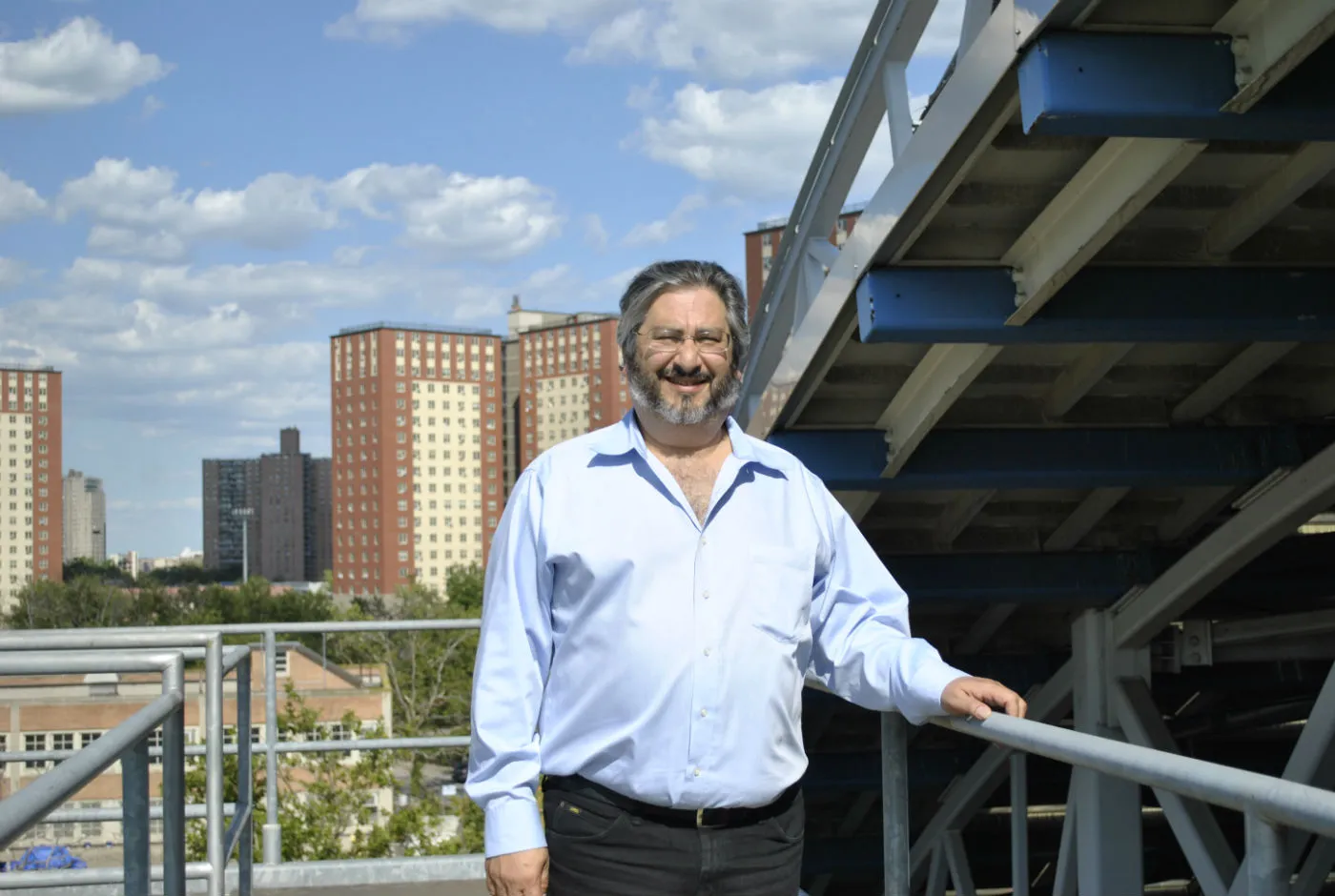
Thomas Abdallah, an adjunct professor in the Sustainability Management Program of Columbia University, loves mass transit. And that’s a good thing, because Abdallah is also the deputy vice president and chief environmental engineer of Capital Program Management at MTA New York City Transit, where he gets to inspect and improve transit facilities every day.
Managing existing operations while integrating sustainability initiatives can be a challenge regardless of industry, let alone one that runs 24 hours a day and serves millions of New Yorkers daily. Add to the mix antiquated infrastructure and century-old signal systems and it is no surprise the MTA has struggled to keep pace with New York City ridership. In a fitting analogy, Abdallah says making upgrades at the MTA is a lot like running down the street and changing your clothes at the same time.
Over the past 30 years, Abdallah has worked to reduce negative environmental impacts of MTA-NYC Transit facilities and construction projects and to expand energy efficiency initiatives. He seeks to educate fellow transit professionals and engineers, as well as policymakers and manufacturers, on the importance of sustainability in transit. Abdallah recently wrote a book entitled Sustainable Mass Transit: Challenges and Opportunities in Urban Public Transportation (Sustainable Mass Transit).
Sustainable Mass Transit examines numerous types of mass transit systems and looks closely at their key functions, including infrastructure design, energy use, and environmental management systems and mitigation. Abdallah wrote the book to explain to the public why mass transit is a sustainable solution. In speaking about his process, he shared the following:
“In order for me to explain sustainability measures, I have to give you an education on the whole transit system: from horse-drawn carriages to coal-burning locomotives. I have to talk about current infrastructure. When you get on the train or the bus, there are countless bus depots and storage yards throughout the city.
“Then there is one of the most important environmental aspects of transit—which is electricity use. We take people out of their cars and into transit, but we still have a carbon footprint to deal with. Even if we’re using electricity, 70 percent of electricity in this country is still generated from fossil fuels. So that’s our biggest environmental issue.
“The rest of the book looks not only at MTA transit—we’re just a small piece of it—but also transit agencies from LA, Chicago, Newark, Boston, Philadelphia, Portland. The transit industry in America over the last 20 years has done a really phenomenal job of reducing their carbon footprint and emissions while still moving many, many people.”
Sustainable Mass Transit is published by Elsevier and can be purchased at most major booksellers.
Harmony Eberhardt is a student in the Sustainability Management master’s program at Columbia University. The full version of this article was originally published on State of The Planet and can be found at http://blogs.ei.columbia.edu/2018/02/16/mass-transit-man/.
This article was originally published in the Spring/Summer 2018 issue of The Columbia Newsletter.