Melvin McCray III’s ‘Harlem Through My Eyes’ Helps Locals Create Generational Heirlooms
The Harlem Through My Eyes founder shares why preserving local histories matters as the nation approaches its 250th anniversary.
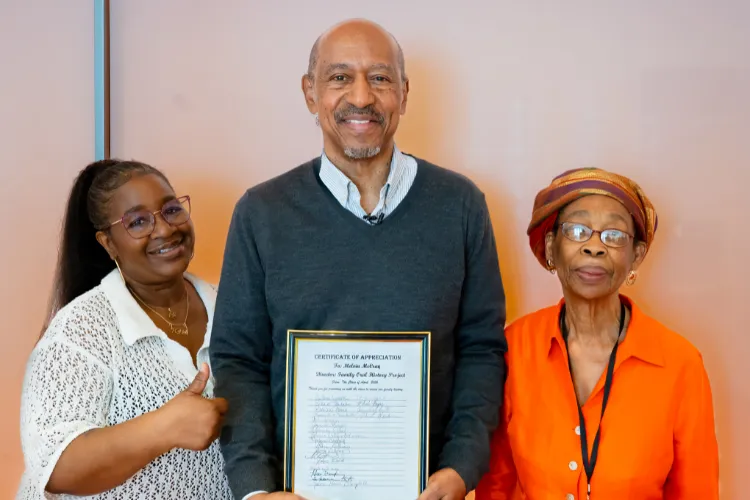
For award-winning journalist, filmmaker, and educator Melvin McCray III, collecting, centering, and celebrating the stories of his family's matriarchs made him realize the importance of preserving generational legacies.
When his mother, Delores McCray, developed dementia, he gathered the photo albums filled with sentimental sepia-toned snapshots of family memories that she kept in her dresser drawer and created a chronological book of images that was reflective of her life’s journey. In his mother-in-law Dollie Lowther Robinson’s latter years, a treasured talk about her career in politics and advocacy for labor rights became a familial keepsake for his three children—two of whom never had the opportunity to meet her—to help them stay connected to their roots.
For decades, McCray has told stories about everyone from global dignitaries to influential women who have shaped history through his work at Time Inc., LIFE, and ABC News, but the poignant personal projects about his family inspired him to look inward, and now he’s helping others do the same.
Through his Harlem Through My Eyes oral history initiative and his Family History Community Workshop series, the former Columbia Journalism School professor is empowering the Uptown community to create their own historical heirlooms.
Launched through McCray’s Digital Media Training Program, a local youth initiative he founded in 2013, Harlem Through My Eyes encompasses education and community-driven storytelling. What initially was an award-winning documentary created by youth from Harlem that won top honors at the White House Student Film Festival in 2015 has evolved into a movement for local historical preservation.
Through the Family History Community Workshops, which are hosted at Columbia University’s Lee C. Bollinger Forum, he holds space for Harlem residents to share their stories and teaches them how to create a family history photo book or a short documentary.
Columbia Neighbors spoke with McCray about the vision behind Harlem Through My Eyes, how individuals can begin documenting their family stories, and why amplifying local histories is more important than ever as the United States approaches its 250th anniversary.
Throughout your journalism career, you’ve always centered humanistic narratives. What drew you to telling stories that highlight the lived experiences of everyday people?
When my family and I first moved to New York from Virginia, we lived in Harlem, then later in the Bronx. From an early age, I was exposed to Uptown spaces like the Apollo Theater and the Schomburg Center for Research in Black Culture, which shaped cultural storytelling.
My first job in the journalism industry was at Time Inc., and then I landed another role at LIFE, where I worked on special reports and the “Year in Pictures” project and highlighted people-first stories. One of the most memorable projects I worked on was Remarkable American Women 1776–1976. Around this time, I launched my own production company, Media Genesis Productions, and produced work that explored societal connections.
Later, I worked as a video editor at ABC for World News Tonight with Peter Jennings, Nightline, and Peter Jennings Special Reports. We used to have this feature called “Person of the Week,” where we highlighted someone leading impactful humanitarian work. It was an opportunity to express myself creatively, and it was uplifting because it inspired people to consider what they could do for their communities and for the world in general. It was like a ripple effect. After every segment, I would walk out floating inches above the ground because I felt good about contributing to these efforts. After I retired, I wanted to continue to help nonprofits and local people tell their stories.
The Digital Media Training Program was the foundation for Harlem Through My Eyes; what was its origin story?
Looking at communities like Harlem, Bedford-Stuyvesant, and the South Bronx, I noticed most of the young people were consuming media, but they weren’t creating it. I wanted to teach them about creating their own stories, highlighting what’s shaping their worlds, and having ownership over their media.
I started a video journalism program at Harlem Renaissance High School with the support of the school’s then-principal, Nadav Zeimer, and that led to the creation of the Digital Media Training Program in 2013. We launched it under the Phelps Stokes Fund and then joined the Board for the Education of People of African Ancestry, created by Doctor Adelaide L. Sanford and community activists.
I wanted to teach video production, photography, and journalism, but I didn’t want to do it in a vacuum. I decided to have the students work on an oral history project called Harlem Through My Eyes, and we interviewed people who lived and worked in Harlem.
A good friend and Princeton University schoolmate, real estate developer Carlton A. Brown, gave us free space at MIST Harlem, where we used one of their rooms for the workshops and their theaters to conduct the interviews with Harlemites. Columbia School of Social Work donated some of its old computers. Bronx Community College donated desks and chairs.
We interviewed Harry Belafonte, Herb Boyd, Jonelle Procope, Betty Blayton, Bobby Hunter, Herman Daniel “Denny” Farrell Jr., Walter J. Edwards, and Brown, who provided the space. We also interviewed Mary Yearwood, the former Curator of Photographs and Prints at the Schomburg Center for Research in Black Culture, who pulled out these wonderful photographs of Malcolm X and explained the process of archiving.
The students were learning video production while interviewing some of the greats in Harlem. There was a powerful intergenerational connection that served as a source of inspiration for our students. There was one 16-year-old who interviewed Harry Belafonte and discovered they both had dyslexia. He imparted wisdom and shared how being dyslexic heightened other attributes, which gave him a sense of confidence.
In 2014, we submitted a three-minute film to the White House Student Film Festival, created under former President Barack Obama as a vehicle for highlighting storytelling among high school students across the nation. In 2015, we entered the competition again, won the grand prize, and went to the White House ceremony. The students attended the festival in the East Room, where they screened 15 short films from programs around the country and got a photo with President Obama. That year, four of our students were from Harlem’s Ulysses S. Grant Houses.
It was groundbreaking for the students, but also for me. I always wanted to teach young people about the power of community storytelling. Now these kids from Harlem were being celebrated at the White House.
What inspired the creation of the Family Community History Workshop series?
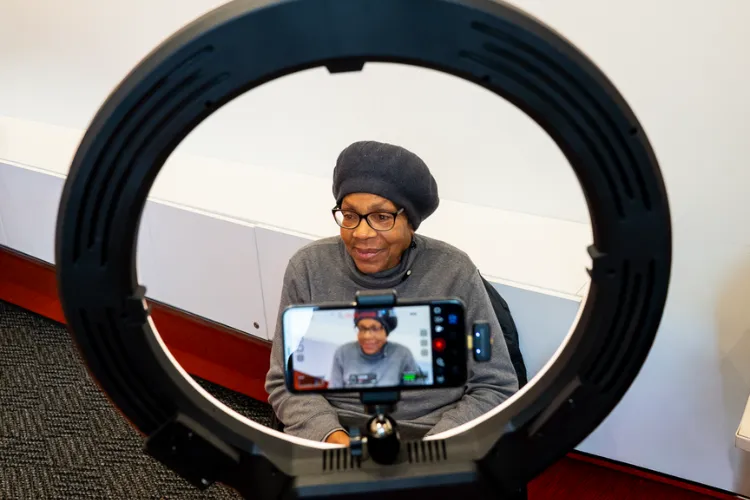
The program is aimed at helping everyday people in the local community preserve their family history. Most people have photographs tucked away in their dressers or shoe boxes or photo albums in their attic or under their beds, and they don’t know what to do with them.
I did a call-out for people to join us for an eight-session course to create family history photo books and short documentaries. What we’re teaching them is to interview themselves and their family members and put all they’ve collected in a book where they can share who their loved ones are and what they mean to them.
We’re giving participants the opportunity to go inward, tell their own stories, reflect on their own lives, and talk about the people who have influenced them.
We kicked things off with an open house last November at the Lee C. Bollinger Forum, and invited participants to bring photographs of their family members. We projected the images on a screen and had them talk about the legacies of their loved ones and what they meant to their families. It was a magical experience. People felt really affirmed and proud to have their family members projected on a huge screen and to get the opportunity to talk about who they are, who they were, and what they meant to them.
It’s been an eye-opener for the participants, many of whom are seniors, who have shared that the experience was cathartic because they’ve been able to broach and express things that may have been known in their families, but never really talked about. We’re giving participants the opportunity to go inward, tell their own stories, reflect on their own lives, and talk about the people who have influenced them. It’s been a very powerful journey.
What specific skills do participants learn during the workshops?
We’ve really focused on using technology as a tool for archiving, particularly speech-to-text software. We used the platform Speechify to do audio renditions of people’s narratives, and people were blown away to hear their stories being told by a narrator.
Another core component of the workshops is developing research skills. We used platforms like Ancestry and some of the large language models like ChatGPT and Perplexity, and people discovered articles, photographs, and other materials about their families that they’d never encountered before.
There was one participant whose relative was part of the Six Triple Eight postal division during World War II. She was able to find a New York Times obituary, photographs, and a lot of material she had never seen.
Another element of the workshop was developing a sense of comfort with the process of documenting the stories. Many people thought they would come in, do an interview, transcribe it, and create first-person narratives—that’s when the true work begins. During the revision process, people were asked to think more deeply about the things they shared.
Instead of just telling a story, we wanted them to visualize themselves in that moment of time. What did it smell like? What were the colors? How did people dress? What was the vibe? How did you feel when you were a 6-year-old walking down the block? What were the sights? What were the sounds?
What were the most memorable familial stories shared during the workshops?
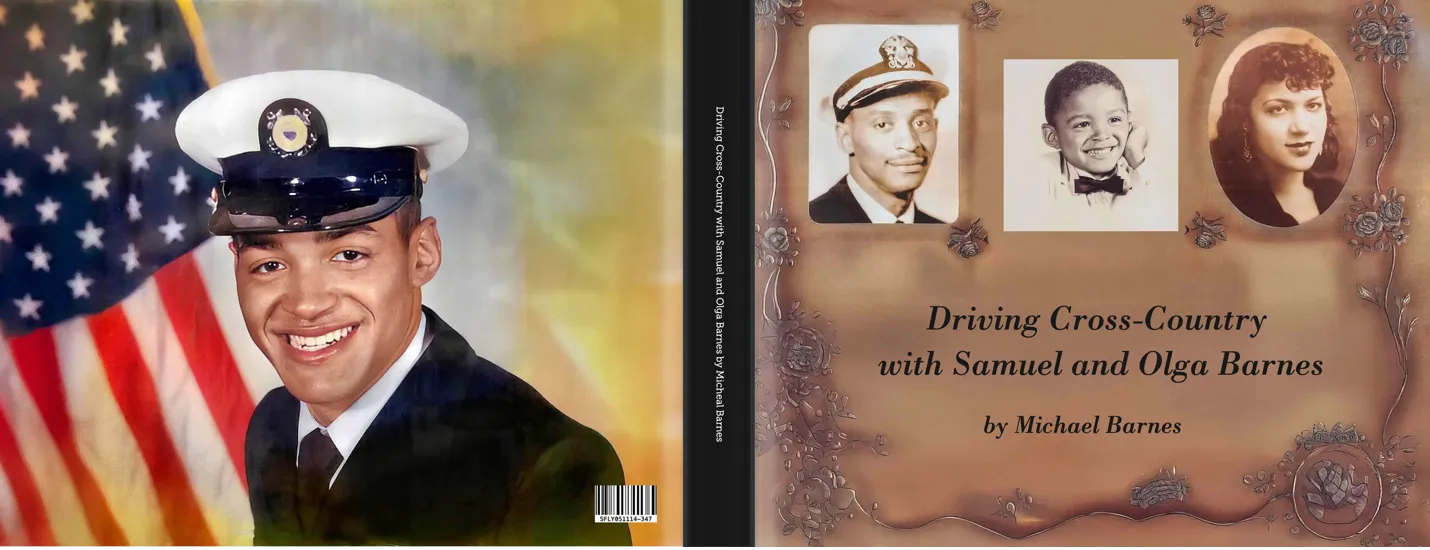
There was a gentleman named Michael Barnes whose father was in a naval officer program that eventually became known as The Golden Thirteen. They were a group of thirteen Black servicemen recruited into a segregated officers training unit, and they made a pledge to help each other graduate from the program.
They worked from sunup to sundown. The lights in their barracks were turned off, so they met at night in the bathroom with flashlights to study. They worked together to bring the ones who were falling behind up. All thirteen men graduated—with the highest scores ever in the program—and they became the first African American commissioned officers in the United States Navy, and broke the color barrier 82 years ago. In later years, they would have reunions, so there are a lot of great photographs of The Golden Thirteen.
Michael also shared how his family would take him and his sisters—one of whom also participated in the workshops—on these trips around the country when they were children, and they used The Green Book to find places they could stay and amusements and national parks they could go to that welcomed African Americans. It was a really intricate story. He went on to become a naval photographer and, with the help of his sister, became a crew member on the Amistad tour ship, which sails along the east coast teaching about the Amistad Rebellion.
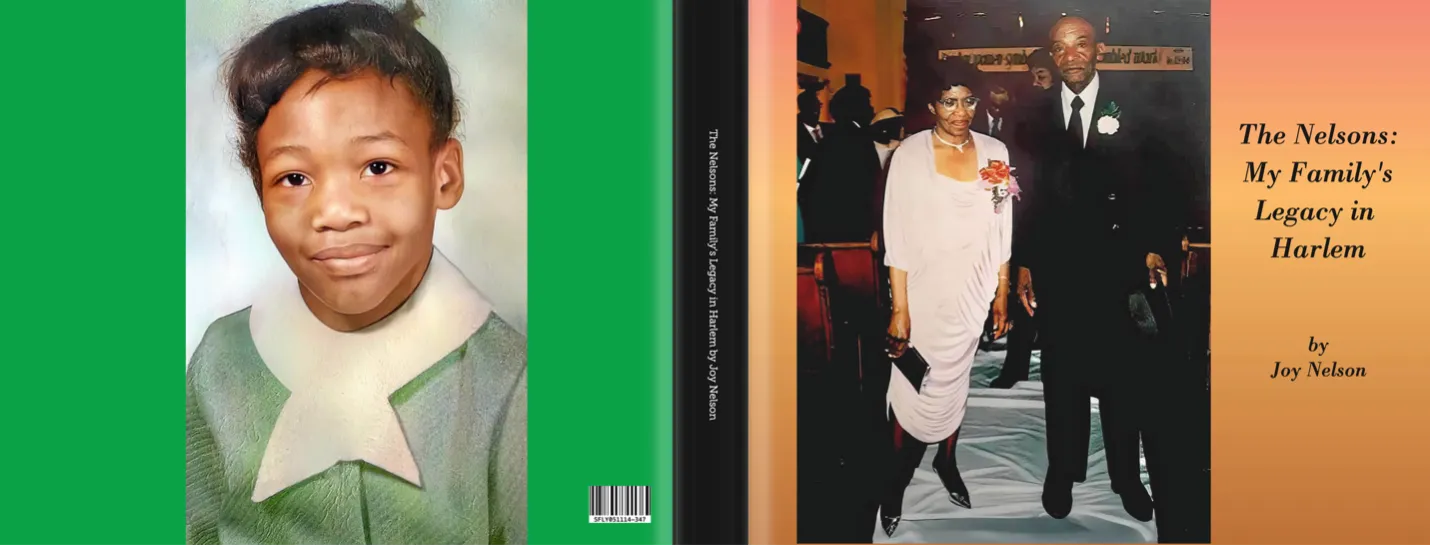
Another participant, Joy Nelson, shared how her father was one of sixteen children in a household so poor that he had to leave school in the third grade to help bring money in. He became a truck driver and a gambler. To Joy, her father was her superhero. She also reflected on the fondness of being raised by the community and how people on her block would look out for her and correct her when she was wrong.
Gloria Richardson, who at 90 years old was one of our oldest students, shared how she was raised by nuns at Saint Aloysius Catholic Church, and that brought forth a greater story about faith and Black nuns.
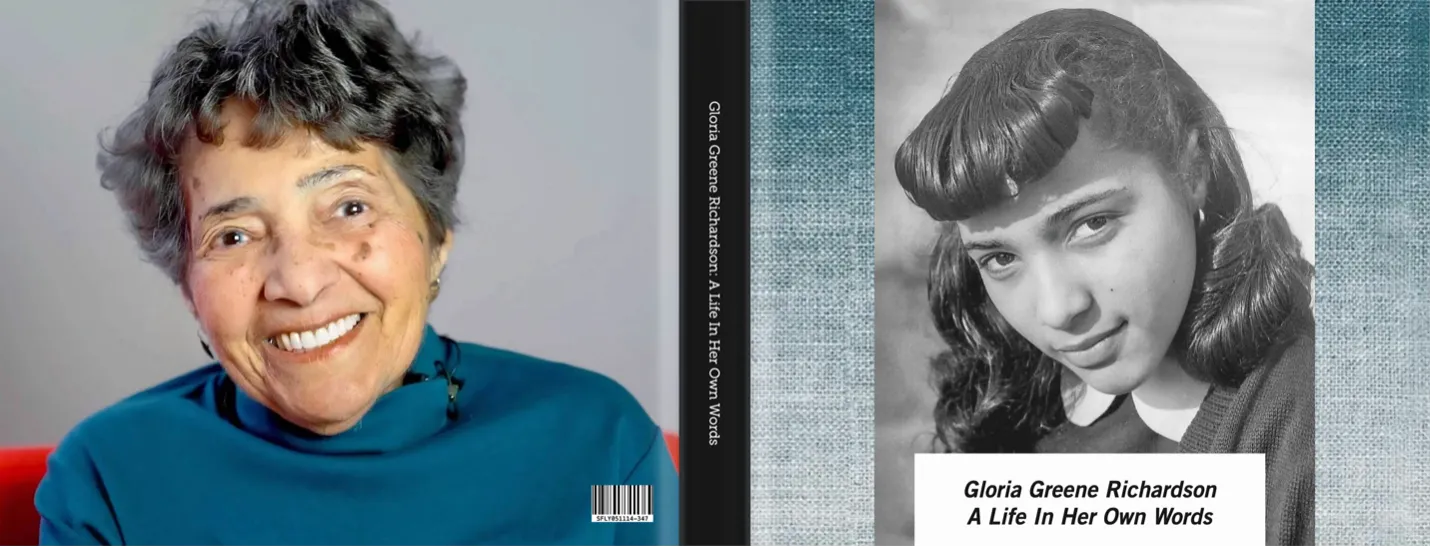
One of the interesting dynamics of the class was that when we first started, people were skeptical about sharing their family histories. They wanted to know who would own these stories after they were shared.
By the end of the eight sessions, people were happy to tell their stories, and they developed a deep interest in learning about the stories of other people and were excited to explore commonalities. The participants were supportive of each other, and there was a wonderful feeling of community.
How has Columbia supported the facilitation of the workshops?
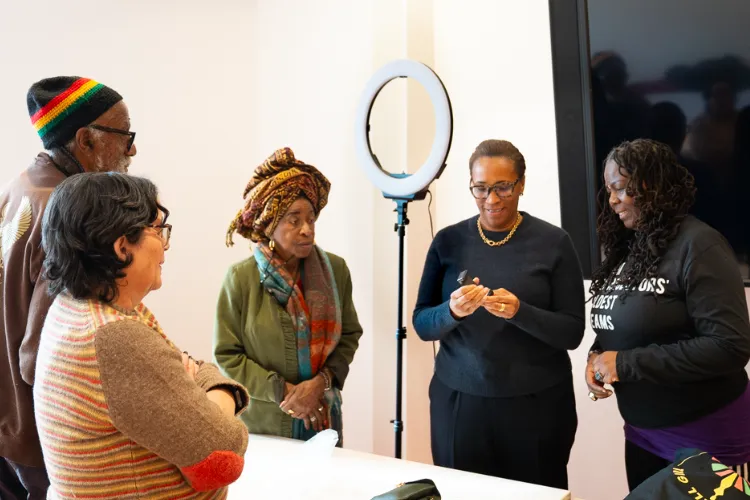
Phoebe-Sade Arnold, executive director of community affairs in Columbia’s Office of Government and Community Affairs, believed in our program and thought it was worthwhile for the community. She advocated for us to have a space in the Lee C. Bollinger Forum.
The Forum’s team provided us with tech support, laptops, and essentially everything we needed to set everything in motion with the workshops. We were able to use not only the classrooms, but the other spaces throughout the building as well, so folks could record their interviews in a quiet setting.
The facilities were beautiful and pristine, which really elevated the program. It was truly a joy to host classes there. It was a great partnership.
Being able to host the Family History Community Workshop series at The Forum wouldn’t have been possible without the support of Phoebe-Sade Arnold and Columbia’s Community Affairs team in facilitating our project.
I hope it will open the door for more community use of Columbia’s facilities, because it’s a huge and wonderful resource, and I think more local groups could benefit from it.
How have other community partnerships contributed to the growth of the Digital Media Training Program and Harlem Through My Eyes?
All of our programs wouldn’t be possible without the goodwill and partnership of people and organizations over the years. Silicon Harlem has been really supportive of what we’re doing. They provided us with Chromebooks when we didn’t have computers. The Riverside Church allowed us to use their facilities when the students were working on the Harlem Through My Eyes documentary. Borough of Manhattan Community College also donated equipment and furniture. The West Harlem Development Corporation has supported our program for years through grant funding. We’ve also received grants from Apple Inc., Trinity Church Wall Street, Collegiate Church of New York, and donations from individuals.
This year marks the 250th anniversary of the United States. Why is it more important than ever to highlight Harlem’s influence on American history?
In the consciousness of Black people in America, Harlem has a pivotal spot. It’s played a critical role in shaping culture, music, history, and thought.
In this current climate, as we celebrate this 250th anniversary of the founding of America, there is a movement afoot to either marginalize the contributions of Black Americans or totally erase them.
It’s more important than ever that we chronicle these stories and disseminate them so they’re not lost or forgotten. We need to double down on our efforts to make sure Black history and Harlem history are preserved permanently for future generations.
If someone wanted to begin the process of preserving their own familial legacy, what’s a good starting point?
Go to the older people in your family and record interviews with them, whether through voice memos or video. Ask them everything you’ve wanted to know about your family’s history. We need to have these conversations while they’re still here and while they still can remember things from the past. While these people are alive, we need to write down their names and their relation to us and make sure their stories are chronicled. Otherwise, when they’re gone, it will all fade into history.
There are a number of tools and resources that can be used for recording the interviews and mapping out the storytelling, including the StoryCorps App and Storyworth. There are also oral history programs at local libraries that can walk you through the process. I’d also recommend transferring your photographs into a digital medium, storing them on something like Google Drive, and disseminating them to family members. The more people you share them with, the less likely they’ll get lost.
What’s on the horizon for Harlem Through My Eyes?
The Family History Community Workshop series is the community outreach component of the four-pronged project: Harlem Through My Eyes will ultimately also be a book project, documentary, and multimedia exhibit. The book will utilize the over 50 interviews we’ve done, turning them into first-person narratives. The multimedia exhibition will include photographs, interview material, and memorabilia from not only some of the people we've interviewed but also from some of the iconic people from the Harlem Renaissance.
There are so many people I want to interview. If I had my way, I'd be out interviewing people all the time.
We’d like to create immersive rooms with holograms that capture the life and times of these trailblazers. For example, a lot of people have never heard the voice of Zora Neale Hurston, but there is audio of her talking about her ethnographic research and what she learned along her travels throughout the South. There’s footage of people like artist Augusta Savage sculpting. There are materials that highlight Langston Hughes’ poetry and Alain LeRoy Locke’s literary work.
There's a lot of really great archival material that coincides with the 100th anniversary of the Harlem Renaissance, which is that 10-year period between 1919 and 1929. We’re hoping to partner with institutions and get corporate sponsorship and foundation grants to tell these stories. We’re also hoping to have compilation books created that include the stories of those who participated in the Family History Community Workshops.
There are so many people I want to interview. If I had my way, I'd be out interviewing people all the time.