Explore the Studio Museum in Harlem’s Legacy of Artistic Innovation and Impact Through These Archival Gems
The globally celebrated museum marked the start of an exciting new chapter as it reopened its space in the heart of Harlem on Nov. 15.
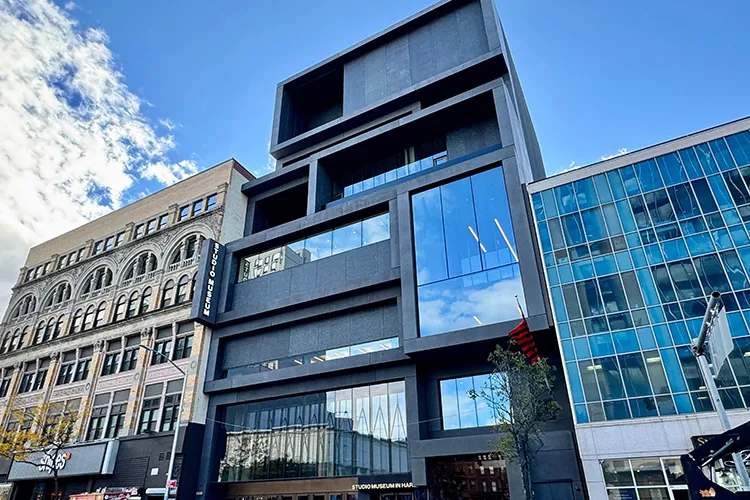
For 57 years, the Studio Museum in Harlem has been a transcendent symbol of culture, creative expression, and community. Throughout its storied history, it has celebrated the brilliance of Black artists across the globe.
It has served as a space for evocative exhibitions, curatorial conversations, and impactful programming and partnerships designed to expand access to the arts, including an initiative with the local nonprofit Arts & Minds—a Columbia Community Service grantee—and the Rikers Island program launched in collaboration with the Center for Justice in Education at The Society of Fellows and Heyman Center for Humanities, the Department of Art History and Archaeology at Columbia, and other partners.
Under the visionary leadership of the museum’s director and chief curator, Thelma Golden—who received an honorary degree from Columbia in 2018—it is ushering in a new era Uptown while carrying forward its tradition of championing artistic innovation and amplifying voices across the diaspora.
On the heels of its reopening, we’re diving into the archives to explore a few memorable moments that shaped its legacy, including those supported in part by Columbians.
While the Studio Museum in Harlem is known for its expansive collection reflecting artistic perspectives across the world, the cultural institution’s early exhibitions were centered on illuminating creativity within the local community. During the 1960s—an era marked by social and political unrest—the work of Black artists was often omitted from major museums and galleries, a lack of representation that persists in the art world today.
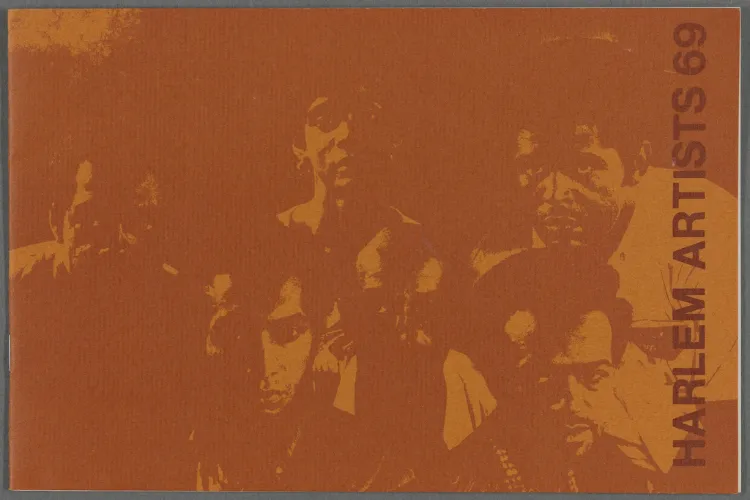
The Studio Museum in Harlem was built as a beacon of empowerment in the face of exclusion. In 1969, an exhibition culminating its inaugural year, dubbed "Harlem Artists 69," featured more than 100 paintings and sculptural works by 53 contemporary artists living in New York City. The show, co-directed by Theodore Gunn and Betty Blayton, presented works inspired by history, heritage, and humanistic experiences.
Among some of the works included in the show was an oil painting titled "118th Street Harlem," by artist William E. Day, a vibrant depiction of Uptown streetscapes, and David Scott Brown’s "The Musicians," an oil-painted ode to jazz music reminiscent of scenes from the Harlem Renaissance.
"Harlem Artists 69" was more than just an exhibition; it was a statement. The definitive project was designed to celebrate Harlem’s rich legacy of cultural creativity and serve as a source of inspiration for generations.
Arts education has always been central to the Studio Museum in Harlem’s mission. Throughout its history, it has elevated the work of emerging artists. From portraitists to photographers, the program—and the museum itself—has served as a launchpad for many of today’s globally renowned innovators. Its Artist-in-Residence program—the museum’s longest-running initiative—is rooted in purpose and practice.
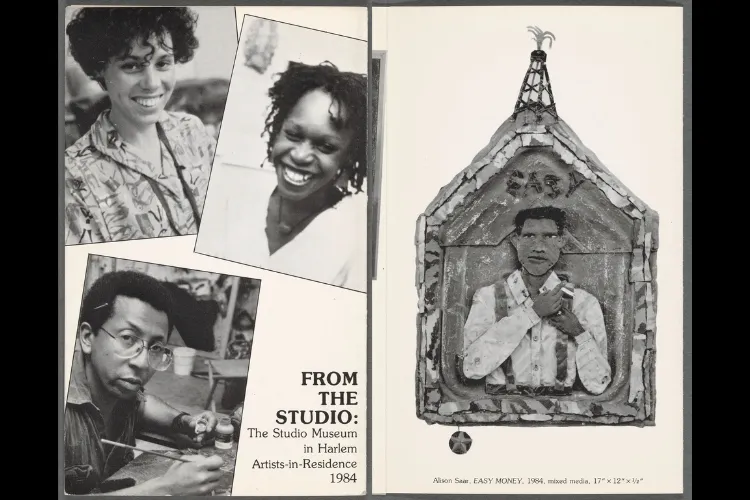
Launched in 1969 and developed by artistic luminary William T. Williams, the program provided Harlem studio spaces for artists to create, connect, and engage with the community. Each residency concludes with a celebratory retrospective exhibition. This archival brochure highlights the 1984 group of artists-in-residence, which included painter James Dupree, ceramicist Sana Musasama, and assemblagist Alison Saar. Although they came from different parts of the country, they were united through a collective vision to use their artwork as a means for storytelling.
This brochure offers a lens into their creative processes and the messages they wanted to convey. To date, the Studio Museum in Harlem’s Artist-in-Residence initiative has supported more than 150 artists. The program’s impact is currently being celebrated through one of the museum’s latest exhibitions, titled "From the Studio: Fifty-Eight Years of Artists in Residence."
Poignant artwork sparks powerful conversations, and that idea inspired the Studio Museum in Harlem’s Lea K. Green Artist Talk series. Honoring the legacy of Lea K. Green, who was instrumental in advancing the museum’s initiatives, the annual community-driven discussions highlight the voices of phenomenal artists and cultural leaders.
In this 2019 candid talk—hosted at the Lee C. Bollinger Forum on Columbia’s Manhattanville campus—Thelma Golden, Ford Foundation Director and Chief Curator of the Studio Museum in Harlem, and New York City-born photographer Dawoud Bey discussed his creative journey, representation in the realm of art, and the inspiration behind his project, "Harlem, U.S.A." which was Bey’s 1979 debut institutional exhibition at the museum. The collection of black-and-white images beautifully captured the essence of everyday life in the local community.
“My motivation for being in Harlem with a camera actually goes back to my family history,” Bey said. “My mother and father met in Harlem, so that’s the beginning of my history. Harlem is central to my own personal narrative.”
Another thought-provoking Lea K. Green Artist Talk, hosted at the Lee C. Bollinger Forum, featured a conversation with interdisciplinary artists Sanford Biggers and Derek Fordjour. Biggers, a Los Angeles native, was part of the Studio Museum in Harlem’s Artist-in-Residence program for the 1999–2000 cycle. His work was also included in the museum’s 2001 exhibition "Freestyle." Fordjour’s work is also featured in the Studio Museum’s permanent collection, of which Columbia alumna Connie H. Choi (GSAS’19) serves as curator.
During this dynamic discussion, Biggers and Fordjour talked about their career journeys, the power of creative expression, and the importance of expanding arts programming at historically Black colleges and universities.
“My mother was one of the most fantastic aesthetically gifted people ever,” Biggers said. “She knew what worked on any level for the senses, and I got that from her. I had to avoid being obsessed with the aesthetics of pieces to get into a deeper realm. That's sort of what got me into the more conceptual and the more ephemeral.”
In 2020, the Studio Museum in Harlem teamed up with Columbia’s Zuckerman Institute to introduce a project dubbed "Studio Lab | shades of blues." Led by Harlem-raised contemporary artist Ivan Forde—Zuckerman Institute’s inaugural Education Lab Artist and part of the museum’s Expanding the Walls program—the initiative explored the parallels between the arts and sciences.
Sitting at the intersection of neuroscience and creative expression, this discussion featured Forde; award-winning trumpet player and composer Dave Adewumi; Dr. Sidney Hankerson, former co-director of the Columbia University Wellness Center; and Dr. Bianca Jones Marlin, the Herbert and Florence Irving Assistant Professor of Cell Research in the Departments of Psychology and Neuroscience at Columbia University and the Zuckerman Institute. Together, they explored the concept of “the blues” in relation to mental health, the hues used in visual art, and the musical genre. It exemplified how the arts interconnect with other fields.