Columbia Business School’s Community Impact Club Builds on a Legacy of Student Volunteerism in Harlem
The club’s co-presidents, Leticia De Mattei Goncalves (BUS’26) and William Szczecinski (BUS’26), discuss making a local impact while pursuing their MBAs.
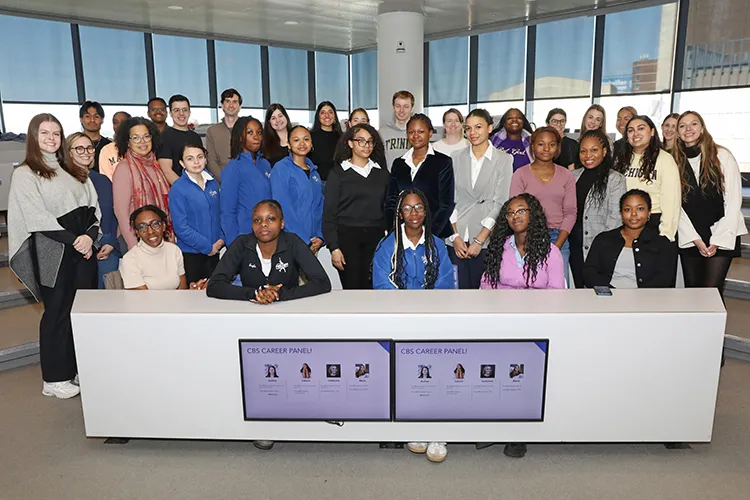
When Leticia De Mattei Goncalves (BUS’26) and William Szczecinski (BUS’26) embarked on their journeys at Columbia Business School, they were both in search of ways to translate the lessons they learned in the lecture halls into service-driven projects that would make a lasting impact in the local community. Their dedication to uplifting under-resourced communities through volunteerism ultimately led them to join the institution’s Community Impact Club, where they currently serve as co-presidents.
Launched in 2011 as the Financial Literacy Club, the student-led group partners with New York City-based nonprofits to organize volunteer projects and free programming centered on financial literacy, mentorship, and career guidance for youth and adults. Among the collective of nonprofits they’ve collaborated with are AHRC NYC, TEAK Fellowship, and Figure Skating in Harlem—a Columbia Community Service grantee.
Columbia Neighbors spoke with De Mattei Goncalves and Szczecinski about the mission of the Community Impact Club, what inspired its first annual Spring Service Week (hosted earlier this month), the importance of students paying it forward locally, and more.
What is the origin story behind the Community Impact Club at Columbia Business School?
Szczecinski: The first iteration of the Community Impact Club was the Financial Literacy Club, which has been a part of Columbia Business School (CBS)'s programming for over two decades. The club’s primary partnership was with AHRC NYC, an organization that serves individuals with intellectual and developmental disabilities. In the past, the club welcomed groups from the nonprofit, largely adults on the autism spectrum, to Columbia Business School for on-campus, financial-education-focused workshops and interview-prep programming. AHRC NYC is still one of our primary nonprofit partners today.
Two years ago, in response to a greater demand to broaden our community service efforts at CBS, the club rebranded to the Community Impact Club to cast a wider net and offer opportunities beyond financial literacy. Since then, our programming and partnerships have expanded in a meaningful way.
We’re continuing to do work with AHRC NYC as our anchor partner—where we host an average of about four events with them each semester—and we’ve added over five new nonprofit collaborators over the last two years, including TEAK Fellowship, Boys and Girls Club of Harlem, Figure Skating in Harlem, groups at The City College of New York, and others.
What inspired you to get involved with the Community Impact Club?
De Mattei Goncalves: I had a major breakthrough in my life when I was in undergrad. I’m from Brazil, and I had the opportunity to travel to the United States to compete in an extracurricular activity I was involved in. My parents were able to fund my whole trip, and that’s when I realized how privileged I was. That was in 2015, and since that moment, I’ve made it my mission to give back to the communities I’m passionate about.
Back in Brazil, I was a volunteer English teacher for a nongovernmental organization that focused on providing language classes for high schoolers and adults who couldn’t afford them. When I got to CBS, I was in awe of all of the resources we had and how privileged we were to be in this school, and I wanted to explore how we can give back. The Community Impact Club was one of the first clubs I joined, and it’s the one I’m most involved with.
Szczecinski: Throughout high school and in college, I was loosely involved in volunteering opportunities. When I moved to New York after undergrad, one Saturday, I literally Googled “volunteer projects near me” and an opportunity to support a soup kitchen downtown named The Father's Heart Ministries popped up. My wife and I started participating in the projects there, and we've been volunteering there for the past six years. It’s really near and dear to us, and it kick-started my involvement in the New York City nonprofit world.
A couple of years later, I got involved with an organization called TEAK Fellowship, which provides kids from underrepresented and disadvantaged backgrounds with access to extracurricular programming and supports them in getting into elite high schools and colleges. I’ve been mentoring one of the students, who is now in high school, for the past three years. I’ve been able to connect TEAK Fellowship with the Community Impact Club, and we’ve been able to bring a group of their students to campus.
Like Leticia, I realized how blessed I’ve been to have gone on the path I’ve been on, and I really wanted to make it a priority to give back. The Community Impact Club is incredibly central to my extracurricular involvement at CBS. Service is embedded in the Columbia Business School culture, and we’re just trying to bring it out even more. I’m amazed by the response and support for the growth of the club in the last couple of years.
“Service is embedded in the Columbia Business School culture, and we’re just trying to bring it out even more.”
Can you share how offering programs centered on financial literacy, mentorship, and career guidance transforms and uplifts communities?
De Mattei Goncalves: I studied engineering during undergrad, and I think there is a huge taboo around math and finance. That perceived difficulty keeps people away from it. I believe knowledge empowers people. There’s a lot to be gained through financial literacy. If you understand what you’re doing financially, a good cycle of things will happen. You’ll know what to do with your money and how to make better investment decisions.
Szczecinski: We’ve been intentional about organizing financial literacy and mentorship workshops for middle- and high-schoolers. I think a lot of us in the club grew up not being taught a thing about financial literacy, and when you step into adulthood, you’re unsure about how things work. We’ve leveraged the vast resources and knowledge of the students at CBS to share these things with youth. It’s really been impactful to have these conversations early with kids.
Through our programming, we want to be approachable and accessible. They have access to Columbia Business School students to have one-on-one conversations about everything from budgeting to exploring different career pathways, and the same goes with the adults with developmental disabilities from AHRC NYC. It’s a special feeling when you look around, and you see all of your peers helping students and adults from these organizations. When the people we support leave our sessions, we hope they’ll carry some of that spark with them and spread that to their classmates or their communities, which has an uplifting effect.
“When the people we support leave our sessions, we hope they’ll carry some of that spark with them and spread that to their classmates or their communities.”
What was the inspiration behind the first Spring Service Week?
Szczecinski: Last year, Leticia and I mapped out priorities for the club, and we landed on growing our event participation and centralizing volunteer opportunities for students at Columbia Business School. We thought April would be a great time to launch a dedicated week to ideally showcase some of our new partnerships and spread awareness about the breadth of opportunities to give back in the local community.
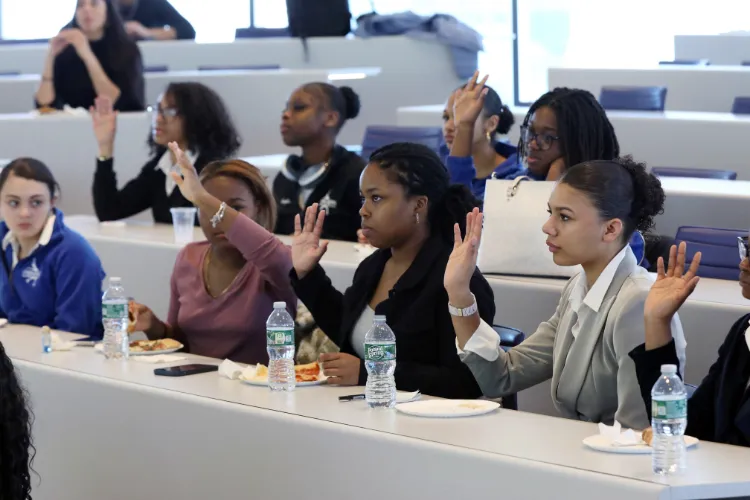
This year, for Spring Service Week, we collaborated with our longtime nonprofit partner AHRC NYC for a mock interview workshop. We also wanted to collaborate with other NYC and Harlem-based organizations, so we teamed up with Figure Skating in Harlem for youth development programming. We also had a tabling donation drive throughout the week to benefit City Harvest, where we accepted canned goods and monetary donations to help food-insecure New Yorkers. Over 100 CBS students signed up to volunteer.
Hopefully, next year we’ll be able to build on these partnerships and foster new ones.
Image Carousel with 8 slides
A carousel is a rotating set of images. Use the previous and next buttons to change the displayed slide
-
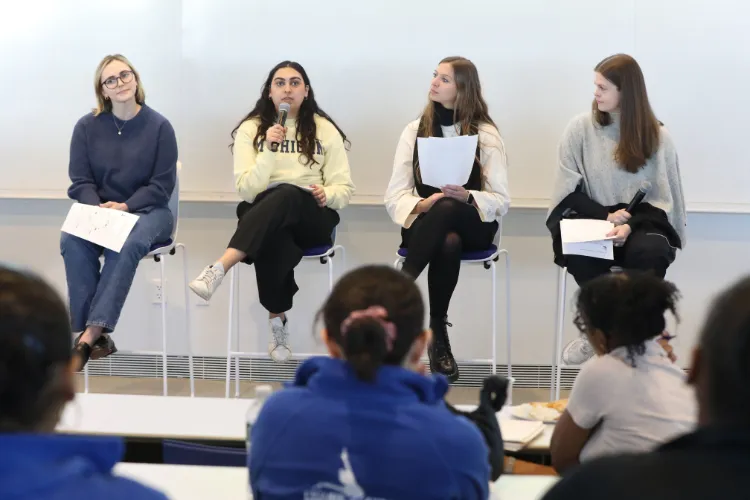
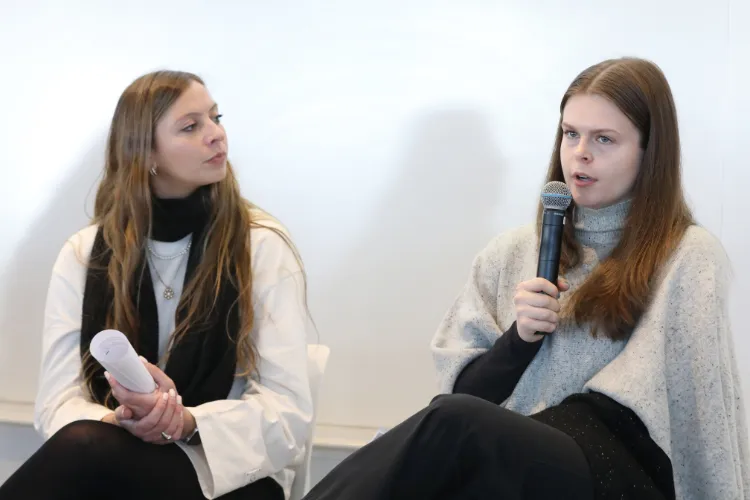
Slide 1: Panelists offered a lens into their paths in the finance industry. Photo credit: Michael DiVito
-
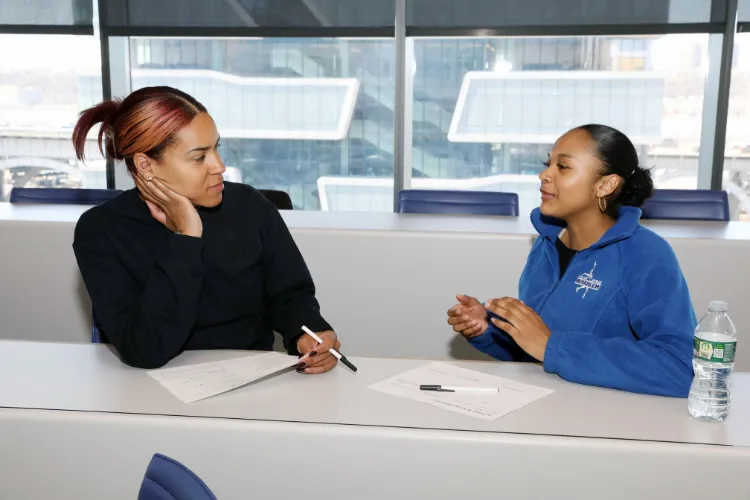
Slide 2: Figure Skating in Harlem students attend a workshop at Columbia Business School Community Impact Club’s first annual Spring Service Week. Photo credit: Michael DiVito
-
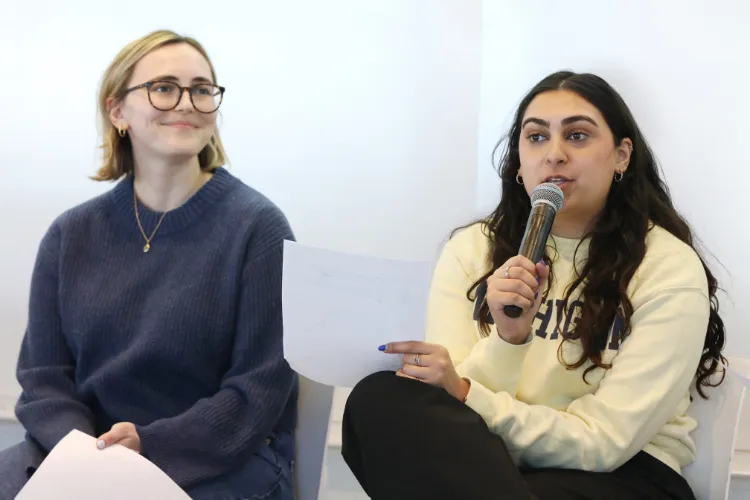
Slide 3: Catherine De Luna (BUS’26) and Sabeen Khan (BUS’25) spoke at Columbia Business School Community Impact Club’s Figure Skating in Harlem workshop. Photo credit: Michael DiVito
-
Slide 4: Juliana Morales (BUS’25) and Audrey Batcheller (BUS’26) shared insights at Columbia Business School Community Impact Club’s Figure Skating in Harlem workshop. Photo credit: Michael DiVito
-
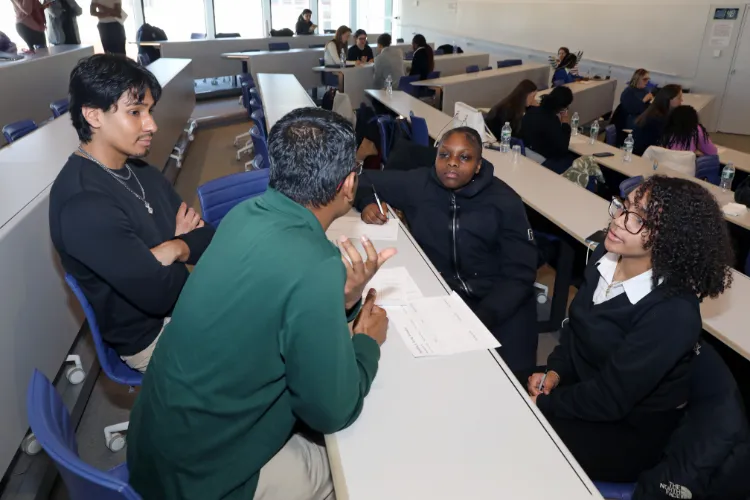
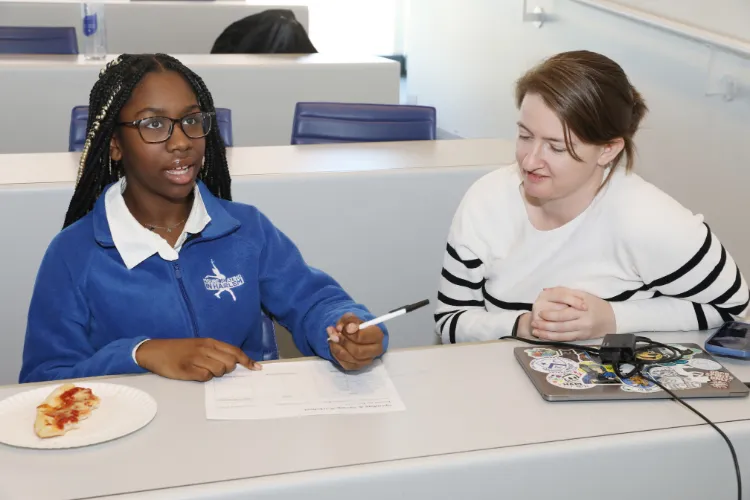
Slide 5: The workshop included one-on-one sessions about financial wellness and career paths in the finance industry. Photo credit: Michael DiVito
-
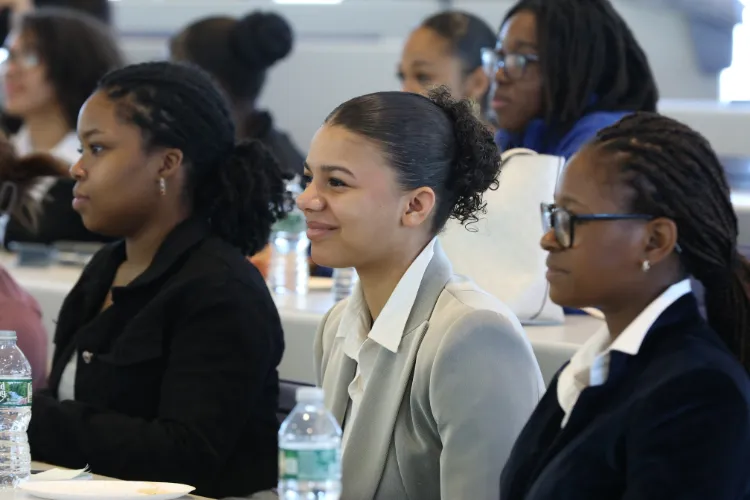
Slide 6: Middle schoolers from Figure Skating in Harlem were eager to learn from Columbia Business School students. Photo credit: Michael DiVito
-
Slide 7: The event illustrated the power of community service. Photo credit: Michael DiVito
-
Slide 8: Attendees at the Columbia Business School Community Impact Club’s Figure Skating in Harlem workshop. Photo credit: Michael DiVito
Can you talk about the significance of students paying it forward locally?
De Mattei Goncalves: New York City is huge, and we wanted to be intentional about where we placed our resources, time, and volunteers. We wanted to focus on the community where Columbia Business School is located: Harlem.
We want to make sure we’re being good neighbors here. Apart from that, we wanted to collaborate with organizations that aligned with our goal of making financial literacy accessible. We’re always excited to invite people to experience the CBS classroom and culture.
“We wanted to focus on the community where Columbia Business School is located, Harlem. We want to make sure we’re being good neighbors here.”
Szczecinski: The Tamer Institute for Social Enterprise and Climate Change has been incredibly supportive in our efforts. Tamer Institute Assistant Director Pat Lilly and her team brought us up to speed on the efforts the school has made in integrating the Manhattanville campus with the West Harlem community and the importance of it. That has served as a source of inspiration for us.
There are so many great volunteer opportunities right in our backyard, and we want the student body to be open and connected, rather than closed off. The CBS campus is physically designed to be open. We have common spaces where people from the local community can attend workshops or just hang out. I think it’s the vision CBS had for this campus. We’re just super pleased to have been able to partner with some amazing local organizations and folks in the past few years.
What are some of the most memorable service-driven projects you’ve worked on since joining the Community Impact Club?
Szczecinski: It’s hard to choose, but I would say all of the workshops we’ve led with local youth. Working with middle and high schoolers from the TEAK Fellowship last year was wonderful. They’re just so incredibly bright and bring such amazing energy.
Being around local kids who have this spark for learning and helping them think through decisions around their academic and career interests at a young age is special.
De Mattei Goncalves: For me, it would be a mock interview session we did with people from AHRC NYC. There was one teenager who wanted to learn more about preparing to enter the workforce, and I helped her go over the basics of putting together a resume. We brainstormed how she could make her past experiences and skills translate into things that are useful for work. She left the session feeling confident. It felt good to know she was going to take what she learned that day and carry it with her. I’ll always remember her.
It was a great reminder of what we can do outside of our MBA and the impact we can have on people’s lives. We also had the opportunity to do a food drive before Thanksgiving last year at the Boys and Girls Club of Harlem, and it was such a rewarding experience. Doing these projects really showed me we’re all a part of the community; students and neighbors alike.
What’s on the horizon for the Community Impact Club?
Szczecinski: We will both be graduating in a few weeks. Spring Service Week was our capstone of the year in terms of programming, and our final event will be with AHRC NYC, where we will invite a group of adults with developmental disabilities to CBS to play trivia, have pizza, and listen to music. It’s a really nice way to round out the year of programming in a lighthearted way.
In terms of looking to the future, we’ve got a wonderful team of first-year students who will be our successors and carry the torch forward in terms of leading the club and participating as board members. We’ve made it clear to the club and the University that we hope Spring Service Week is the first of many and will be a tradition that lasts.
What does Commencement symbolize for you?
De Mattei Goncalves: I graduated from undergrad during COVID, so I’ve never had the opportunity to have an in-person celebration for finishing a degree. My family is coming all the way from Brazil, and I’m excited for them to see the place I've called home for the past two years. Studying at Columbia was such a special time in my life, and Commencement is a capstone to that. I’m so excited.
Szczecinski: It’s bittersweet for sure. Rather than looking at it as the end of something, I think it’s helpful to view it as a beginning of the rest of what’s to come and what we prepared for in school. Thanks to Columbia, I’m just as excited to get out there in the real world, put what I’ve learned into practice, and maintain all of the amazing relationships.