What You Need to Know About the June 23 New York Primary
Here’s what you need to know about the June 23 primary, which will feature ranked-choice voting for local, city, and statewide offices.
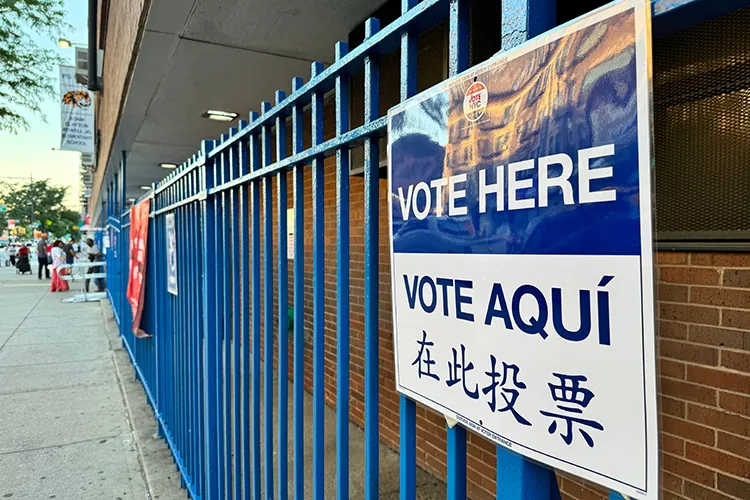
It’s time to prep for the primaries! On June 23, New Yorkers will head to the polls to cast their votes for candidates running for local, state, and federal offices in the New York Primary. Offices on the ballot include State Senator, U.S. Congressional Representatives, City Council, State Attorney General, State Comptroller, and more, based on where you live.
Ahead of the upcoming election, we want to ensure our neighbors stay in the know about everything from early voting—which runs from June 13 through June 21—to local polling locations. Dive into this Columbia Neighbors-curated guide of voting resources.
Two important things to note for this election:
- New York is a closed primary state, meaning you must be registered with a specific political party to participate in the primary election.
- Primary and special elections for city offices use ranked-choice voting, which means you can rank up to five candidates in order of your preference for a specific office (more on this below).
Here, we’ve answered some frequently asked questions about the upcoming primary, including voting locations and an explainer on ranked-choice voting.
Who will be on the ballot on June 23?
Local, state, and federal offices appearing on the ballot are:
- U.S. Representatives in Congress
- State Senator
- State Attorney General
- State Comptroller
- State Assembly Member
- New York City Council
You can receive a sample ballot, which includes the offices and candidates that will be on your ballot on voting day, at the Board of Elections website. You can also find a sample ballot at vote411.org.
If you would like more information about the candidates that will be on your ballot, NYC Votes offers a "What's on the Ballot?" resource. Columbia’s School of International and Public Affairs also offers a candidate overview at whosontheballot.org. Both of these resources are normally updated as election day approaches, but individual research on candidates is encouraged.
What are the dates that I need to know for the June 23 election?
These are the important dates you need to know to get ready for June 23, including information on early voting, voter registration, absentee ballots, and polling places.
- JUNE 8: This is the day voter registration change of address must be received by the Board of Elections.
- JUNE 13: This is the last day to submit an application to the Board of Elections to receive an early mail ballot, absentee ballot, and voter registration form. You can submit these forms online, by email, or by phone. Learn more about ways to vote on NYC Votes.
- JUNE 13-21: Early voting. Find your early voting poll site here (it may be different than your regular voting site).
- JUNE 13: Last day to apply to register to vote in person at the Board of Elections.
- JUNE 22: Last day to request a Primary Election mail ballot in person.
- JUNE 23: Deadline to return early voting ballot and absentee ballot. You can deliver your ballot in person at the Board of Elections or your local poll site by 9 p.m.
- JUNE 23: Primary election day! Polls are open from 6 a.m. to 9 p.m. You must vote at your assigned poll site.
How do I know if I can vote in the June 23 primary?
Only voters who are already registered with a political party can vote on June 23. See if you are already registered and with which political party at voterlookup.elections.ny.gov.
If I am an Upper Manhattan resident, where do I go to vote?
Early Voting Locations
If you're planning to vote early in this election, enter your address at findmypollsite.vote.nyc to find your assigned early voting location. For Manhattanville residents, early voting will once again take place at The Lee C. Bollinger Forum, 605 West 125th Street.
June 23 Polling Locations
If you plan to vote on June 23, enter your address at findmypollsite.vote.nyc. A reminder that all polls are open from 6 a.m. to 9 p.m. on June 23.
How does ranked-choice voting work?
In a 2019 ballot measure, New Yorkers chose to use ranked-choice voting for primary and special elections for certain city offices, including Mayor, Public Advocate, Comptroller, Borough President, and City Council.
In ranked-choice voting, voters rank five candidates in order of preference. If a candidate receives over 50% of the first-choice votes, they win. Then, according to the New York City Board of Elections:
“If no candidate earns more than 50 percent of first-choice votes, then counting will continue in rounds. At the end of each round, the last-place candidate is eliminated and voters who chose that candidate now have their vote counted for their next choice.
“Your vote is counted for your second choice only if your first choice is eliminated. If both your first and second choices are eliminated, your vote is counted for your next choice, and so on. This process continues until there are two candidates left. The candidate with the most votes wins.”
Here's a video that explains how it works:
What changed about absentee and early mail-in voting?
The New York Early Mail Voter Act took effect on January 1, 2024, applying to all elections moving forward, and established an additional method of voting New York: voting early by mail.
Any registered voter can use an early mail ballot. The difference between an early mail ballot and absentee ballot is that absentee ballots require a “valid reason” for being unable to vote in person, such as being out of town or illness/injury. You can still vote absentee, but now all registered voters in New York can use early mail-in voting without needing to provide a reason.
Learn more here and in the video below.